

The Antares E2 advantages
Unique skills for demanding missions.
20+ hours flight time
Continuous operations covering vast areas.
Zero emissions
Environmentally friendly operation and clean sensor data with minimal infrastructure.
Ultra-quiet
Discreet surveillance without noise or disruptive environmental impact.
200kg payload
Modular sensor integration for missions, also with real-time transmission.
Applications that set standards
Unique skills for demanding missions.



Lange Research
Learn more about our mission, our partners, and the latest developments.


Antares E2: The benchmark for emission-free long-haul operations
Since the world's first fuel cell flight in 2009, Axel Lange has pursued one goal: maximum flight time without CO₂ emissions. The Antares E2 is the result of this pioneering work and sets new standards in aviation.

Aircraft overview
The Antares E2 combines the endurance of a long-range aircraft with the flexibility and low operating costs of an electric system. Its 23-meter carbon fiber wing carries six electrically driven propellers mounted above the wing, ensuring an unobstructed view for sensors. Two redundant PEM fuel cell stacks provide the necessary energy for up to 20 hours of flight time.
Key features:
Flight duration up to 20 hours
3,000 km range
200 kg payload capacity
Extremely quiet operation
Zero emissions (only water as a byproduct)
Optimized nadir field of view for sensors
Technical specifications (excerpt)
Span:
Maximum flight duration:
Reach:
Payload:
Drive:
Fuel cell:
Hydrogen storage:
Maximum Takeoff Weight (MTOW):
Operating altitude:
approx. 23 m
up to 20 hours
up to 3,000 km
up to 200 kg in three sensor packages
6x propellers, hydrogen-electric
2x redundant PEM stacks (75 kW nominal power each)
Pressurized hydrogen (approx. 30 kg@700 bar)
1,650 kg
max. 6 km - FL200 (depending on configuration)
Antares E2 - Photo Timeline 2018 - 2025


Versatile applications of the Antares E2
One aircraft – dozens of highly specialized roles. The Antares E2, with its unique characteristics (long flight duration, quiet operation, zero emissions, high payload capacity), offers solutions for a wide range of industries and tasks.

Maritime & Coastal ISR
Fisheries control, anti-smuggling, SAR support. 20-hour patrol without refueling, silent approaches.

Environment & Disaster Relief
Flood mapping, early warning of forest and steppe fires. Sensors free of exhaust fumes.

Infrastructure & Energy
Monitoring of power lines, gas and oil pipelines. Nadir-Design delivers crystal-clear thermal and hyperspectral data.


Certification & Safety - "Made in Germany"
Safety and reliability are paramount. The Antares E2 is designed to CS-23 / FAA Part 23 standards. The n-2 design of the propulsion and power supply systems allows for the failure of two engines or one fuel cell stack without mission abort. Structural and lightning protection meet the highest requirements.
Economic efficiency: Electric engines have less than 10% of the moving parts of a turboprop. Maintenance intervals are extended, and energy costs are predictably reduced – an advantage that is reflected in every Total Cost of Ownership (TCO).

Pioneering work with hydrogen: From DLR-H2 to the Antares E2

Antares DLR-H2 during its record-breaking flight in 2009 – piloted by Axel Lange
Photo: DLR - German Aerospace Center
The Antares E2 is not at the beginning, but stands on the shoulders of a globally unique development history.
As early as 2009, Lange Aviation, together with the German Aerospace Center (DLR), developed the first manned aircraft to take off exclusively using fuel cells – the Antares DLR-H2. Piloted by company founder Axel Lange, the aircraft completed its maiden flight in Hamburg on July 7, 2009. In the same year, it set an altitude record for hydrogen-electric aircraft in Zweibrücken, reaching 2,558 meters.
In June 2010, the DLR-H2 flew over 380 km emission-free from Zweibrücken via Hof to the ILA Berlin, performed public demonstration flights there and continued its journey to Stuttgart – exclusively with hydrogen and electricity.
The Antares DLR-H2 proved for the first time under real flight conditions the practicality of a fuel cell electric propulsion system – with an efficiency of over 44% from hydrogen to the shaft of the electric motor.
These experiences were directly incorporated into the development of the Antares E2 – a new benchmark for quiet, long-lasting and emission-free hybrid flight.
Application: Maritime & Coastal ISR
The Antares E2 revolutionizes maritime surveillance and reconnaissance through its unparalleled endurance and discretion.

Challenges & Solutions
Traditional maritime patrols are limited by restricted operating hours, high operating costs, and noise pollution. The Antares E2 offers:
Persistent monitoring: Up to 20 hours of flight time enable seamless coverage of vast sea areas or long-term observation of specific targets.
Discreet operations: The extremely quiet drive allows for inconspicuous approaches and surveillance without disturbing or alerting targets – ideal for fishery control or anti-smuggling operations.
Cost efficiency: Significantly lower operating costs compared to manned aircraft or helicopters.
Versatile sensor technology: Space for EO/IR cameras, AIS receivers, marine surveillance radar and SIGINT systems.
Typical missions
Fisheries protection, monitoring of Exclusive Economic Zones (EEZs), combating illegal migration and smuggling, anti-piracy measures, support for search and rescue (SAR) operations, environmental monitoring (e.g. oil spills).
Application: Environment & Disaster Relief
With zero emissions and a quiet flight profile, the Antares E2 is the ideal tool for sensitive environmental missions and rapid responses in disaster situations.

Challenges & Solutions
Environmental data must be precise and unaltered. In a disaster, every minute counts.
-
Contamination-free measurements: Since the Antares E2 only emits water, sensitive air quality sensors or bioacoustic recordings are not disturbed by its own exhaust fumes.
-
Long-term observation: Ideal for monitoring changes in ecosystems, animal migrations, or the spread of environmental damage.
-
Rapid damage assessment: After natural disasters (floods, storms, earthquakes), the E2 quickly delivers high-resolution images and data for situation assessment.
-
Early warning: Detection of forest fire hotspots using thermal imaging cameras, monitoring of dikes or glacial melt.
-
Low-noise operation: Minimal disturbance to wildlife during observation flights or in nature reserves.
Typical missions
Early detection and mapping of forest fires, flood monitoring, recording of storm damage, monitoring of air and water quality, wildlife counting and observation, mapping of vegetation health, noise mapping in urban areas.
Application: Infrastructure & Energy
Efficient and precise aerial monitoring of critical infrastructures and facilities.

Challenges & Solutions
Inspecting long linear infrastructures or large facilities is time-consuming and costly.
Optimal data acquisition: The nadir design of the E2 (unobstructed downward view) allows the use of thermal and hyperspectral cameras for detailed analyses of pipelines, power lines or solar parks.
Large-area coverage: Long flight times reduce the number of missions required for a complete inspection.
Precision agriculture: Multispectral sensors help in the analysis of plant health and irrigation needs.
Safe inspection: Dangerous or hard-to-reach areas can be inspected without risk to personnel.
Typical missions
Inspection of oil and gas pipelines, monitoring of high-voltage power lines, inspection of wind turbines and solar parks, precision agriculture, surveying and mapping for construction projects.
Application: Research & Atmospheric Chemistry
A clean and durable platform for precise measurements in the atmosphere.

Challenges & Solutions
Atmospheric measurements often require high-altitude flights and a platform that does not distort the measurement results.
-
Zero self-emission: The E2 is ideal for measuring trace gases (ozone, CO₂, CH₄, aerosols) because there is no self-contamination from combustion exhaust gases.
-
High flight altitudes: Ability to operate at altitudes up to 6 km to study different atmospheric layers.
-
Long measurement campaigns: Creation of detailed concentration profiles over large areas or over longer periods of time.
-
Versatile sensor integration: space for gas analyzers, particle counters, radiation sensors and meteorological instruments.
Typical missions
Measurement of greenhouse gas concentrations, investigation of air quality, aerosol and cloud research, research on "Clear Air Turbulence" (CAT), validation of satellite data, agricultural meteorology.
Application: Special operations
The "Eye in the Sky" for demanding surveillance and rescue missions.

Challenges & Solutions
Sustained presence and discreet observation are often crucial for success.
Hours of air presence: Ideal for search and rescue (SAR) operations where large areas need to be searched.
Discreet surveillance: The quiet flight enables the inconspicuous observation of major events, demonstrations or border areas without the disturbing noise of helicopters.
Flexible payload: EO/IR cameras for day and night use, radio direction finders, communication relays.
Temporary data relay node: Bridging communication in areas with poor infrastructure.
Typical missions
Search and Rescue (SAR), monitoring of large events and demonstrations ("crowd monitoring"), border surveillance, detection of illegal activities (e.g. poaching), temporary communication relay.
Technology: Innovation that flies – certifiable today, scalable tomorrow
The Antares E2 is based on an integrated technology concept that prioritizes efficiency, reliability and environmental compatibility.

H₂ fuel cell system
The heart of the Antares E2 is a highly advanced PEM (Proton Exchange Membrane) fuel cell system. It converts hydrogen and atmospheric oxygen directly into electrical energy – with water as the only byproduct.
High efficiency: Up to 55% system efficiency.
Redundancy: Two independent stacks for maximum security.
Long service life: Designed for 40,000 flight hours.
Active cooling and triple sensors for optimal operation.
Electric drives
Six passively cooled drive units with gearless permanent magnet motors and integrated inverters ensure quiet, efficient and low-maintenance propulsion.
High reliability: Fewer moving parts than conventional drives.
Low noise level: Significant reduction in the noise level.
Quick-change system: Drive units can be replaced in less than 30 minutes.


CFRP integral structure
The entire aircraft structure, especially the wings, is manufactured using a lightweight and extremely strong carbon fiber composite (CFRP) construction. This enables high payload capacity and aerodynamic efficiency.
-
Integrated lightning protection and anti-icing system.
-
High structural strength at low weight.
-
Aerodynamically optimized design for long flight times.
Modular Payload Bay
The Antares E2 offers flexible options for integrating a wide variety of sensors and payloads.
Capacity: Up to 200 kg.
Installation locations: 1x fuselage bay, 2x external cargo containers (optional).
Power supply: 28V and 400V bus available.
Data connectivity: Prepared for real-time line-of-sight communication with high data rates and satellite communication.
Standardized interfaces

Partners: Shaping the future of aviation together
Transformation can only succeed together. Whether it's H₂ stack upgrades, liquid hydrogen, or urban air mobility – Lange Research is opening its testing ecosystem to partners from industry and research.
Open Hub – Antares E2 sensor platform & partner ecosystem
The Antares E2 delivers 20 hours of endurance, up to 3,000 km mission range, 6 km operating altitude and 200 kg external payload – all housed in a sleek single-seat fuselage.
It can be operated in two modes:
-
Manned (VFR / IFR)
Takeoff/landing in controlled zones, short scientific flights - one seat, HUD + autopilot assist -
Unmanned (RPAS)
Long-duration orbit (> 15 hours), ocean routes, night patrols - Dual-SATCOM + Link-16/LTE fallback; switchover to ground control room
Whether manned or unmanned: The E2 transmits sensor data in real time via Ku-band SATCOM (up to 20 Mbit/s) or line-of-sight link (up to 200 Mbit/s) to ground stations or emergency vehicles.
Depending on the mission, up to three different sensor packages can be mounted externally: on two quick-change plates on the underwing with locking bolts and in a form-fitting belly gondola.
-
Simple and safe assembly
-
Power and data bus per station: 28 V DC / 400 Volt bus, dual Gigabit Ethernet, optional fiber optic.
-
MICD “QCS v1.0” defines load limits (±4 g), pin layout, vibration profile.
-
Sensor change in < 30 min with a ground crew of two people.
Sensor pods and typical E2 application areas
Optics (vis / IR)
45 MP gimbal, LWIR core
Early forest fire detection, solar park thermogram E2Multispectral / Hyperspectral
400–2500 nm Push-Broom
Precision agriculture, oil spill detection E2LiDAR (< 75 kg)
4 MHz scanner, GNSS/IMU
Digital terrain model, forest biomassAcoustics / Infrasound
Microphone array, sonobuoy dropper
Whale monitoring, volcano early warningatmosphere
CH₄ analyzer, aerosol spectrometer
Methane leak detection, ash trajectoriesgeophysics
Magnetometer boom, GPR container
UXO mapping, permafrost analysiscommunication
AIS/ADS-B, LTE relay node
Coastal ISR, emergency nets
Exemplary missions and main users
Coastal ISR 18 h
AIS + SAR pod monitors 1,200 km of sea border – silently for residents
Coast Guard, FrontexMethane Patrol 24 h
CH₄ scanner covers 2,000 km of pipeline in one flight
Energy companies, environmental authoritiesWildlife Bioacoustics 12 h
Dolphin counting without engine noise
NOAA, WWF, UniversitiesLiDAR disaster mapping 8 h
3D terrain model < 6 h after earthquake
UN-OCHA, THW, NGOsPermafrost radar 10 h
GPR grid over Arctic tundra
Polar research institutes24-hour event security
HD video + LTE relay, barely audible
Police, organizers
Press & Media
Here you will find current press releases, high-resolution image and video material, as well as white papers and technical articles about Lange Research and the Antares E2.
Press contact
For media inquiries, please contact:
Andor Holtsmark, Communications
info@lange-research-aircraft.com
Ph: +49-6332-9627-0
Press contact
For media inquiries, please contact:
Max Mustermann
Head of Communications
presse@lange-research.com
Tel: +49-6332-9627-0
Our innovation platform
We believe in the power of collaboration and offer a platform for co-engineering, joint research projects and the development of pioneering technologies in the field of hydrogen aviation.
We are looking for partners who share our vision and want to actively contribute to shaping a sustainable and efficient aviation industry:
Industrial companies (sensor manufacturers, system integrators, etc.)
Investors and funding institutions
Start-ups with innovative technologies
Sensor OEMs & Analytics start-ups – flight hours instead of their own fleet.
Research institutes – long-term data for climate, biodiversity and atmospheric models.
Authorities & emergency services – ISR, border protection, disaster relief without turboprop emissions.
Industry & Energy – Pipeline monitoring, offshore wind, grid audit.
NGOs – environmental and humanitarian missions with a minimal CO₂ footprint.
Current and past programs
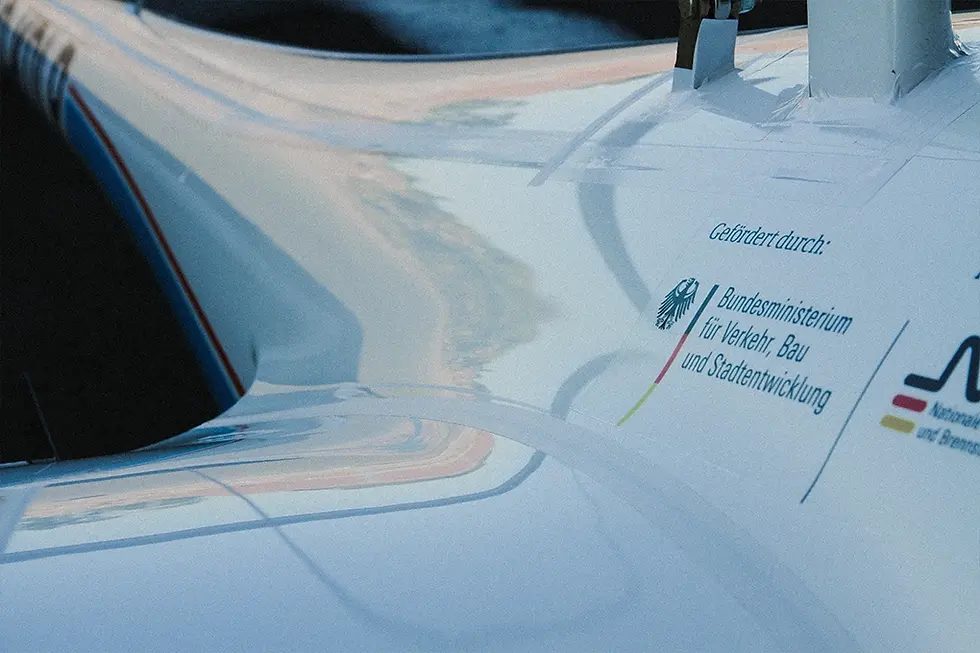
Strong partners for a new generation of aircraft: The development of the Antares E2 is supported by a network of leading funding institutions and technology partners.
Together they are driving innovation in electric aviation:
We are always open to new project ideas and cooperation requests.


Contact us
Are you planning a mission, interested in becoming a partner, or do you have questions about our technologies? Our team of experts looks forward to hearing from you.
Lange Research Aircraft GmbH
Brüsseler Strasse 30
D-66482 Zweibrücken
Germany
Email: info@lange-research-aircraft.com
Telephone: +49-6332-9627-0
Write to us directly

Lange Research Aircraft GmbH
Follow us: